Friday, March 26, 2010

David and Joan Webb

The presentation by David Webb was really entertaining and informing. David and Joan Webb are both really charming people. The way he presented was really interesting. He focused mainly on vacuums. There was the bar that had one atmosphere in it. I never knew atmosphere was a unit of measure; I thought it was just the air around us. I helped out with the balloon experiment. In the vacuum machine, a little tiny balloon became a bigger balloon. It was really unbelievable. I was really jealous of the person who got to eat the marshmallow. When I saw them I got really excited and they were PINK. That's my favorite color, so I was even more excited! They were the same ones I made smores with at my friend's house! That was a pretty good way to spend my chemistry block day.

Calorimetry

M C delta T, that's calorimetry yo. q is energy, c is specific heat, and delta t is the change in temperature. That song was a bit disturbing, but catchy at the same time. It really helped me learn that formula though since it was so memorable. Calorimetry is a measure of heat flow. The measurements are made in an insulated apparatus called a calorimeter.

ELEPHANT TOOTHPASTE!


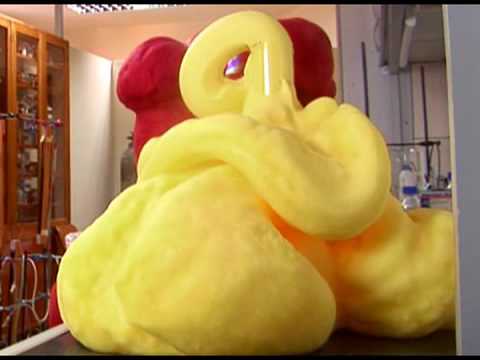
Elephant toothpaste...some pretty interesting stuff. I've been waiting for it and forgot about it. It was hydrogen peroxide and dishwashing soap combined together. Then, when Mr.Olson poured in the potassium iodide, the solution turned yellow and started poofing up and spilling out like crazy. Before in the video I was seriously grossed out and seeing it in person was really weird. It looks pretty cool though, I have to say.


Thermochemistry

Thermochemistry was a new unit we started! I learned about endothermic and exothermic reactions. Catalysts speed up a reaction, but don't get consumed in it. Activiation energy is reduced because of those also.
The graph for exothermic and endothermic reactions are opposite. Energy can't be lost or gained so it is EVERYWHERE! The packet took a long time to do, but I still got full points on it, so I'm proud of myself. I think I did pretty good on the test too! There were a lot of equations like the changing phases one which included a combination of many of them. It was a very confusing unit, but still oh so interesting.

Friday, February 12, 2010

The Creation of Magnesium Oxide

On block day we started a lab. First we had to find the balanced equation for magnesium and oxygen reacting to form magnesium oxide. Using the stoichiometry format, we had to calculate the mass of magnesium needed to form 0.60 grams of magnesium oxide. It turned out to be 0.36 grams of magnesium. After cutting the needed amount, it was put into a crucible and put on a fire to burn. It took a long time and I was getting impatient.


This was the end result and my group got an percent error of 33% a little much...but it's ok! I'm just looking forward to the three day weekend! =)

Stoichiometry

Stoichiometry! What a difficult and confusing subject. Changing grams to moles to grams to moles gets too complex. I didn't get it at all at first, but after a few more practice problems and I think I have the hang of it now. I hope I don't forget how to do those problems, or else that won't be very good since the test is soon. It's even going to be an extra credit problem!


There is a total of seven steps to these types of problems. Starting with the given, changing g x to mol x, then mol x to mol y to g y, cancel, and box your answer with the units! Just typing that gets me confused, but when I go to write it down, hopefully I will understand it more.

BOOM BOOM REACTIONS!

I have learned how to balance...CHEMICAL EQUATIONS! There are so many types of reactions, but we only have learned about single replacement, double replacement, combustion, and synthesis. To increase a reactions rate you have to increase the temperature, surface area, or concentration. Catalysts also speed up the reaction rate without being sucked into the reaction.


Some reactions that happen every day is iron turning into rust! I also saw one first hand when Mr.Olson smashed cannon balls covered in aluminum foil creating sparks. My favorite was the gas turning into flame, but I kept thinking the roof was going to burn down.